- Leeks, Beets & ‘Extra’ Weeks
- Spring? Already?
- A Merry Christmas Re-Post
- Can Job Stress Kill?
- Dessert Fads in 2011
- Best Thanksgiving Perk: Cranberries
- 4 Safety Features That Lower Car Insurance
- Things to Do with Fallen Leaves
- Another Autumn Goodie: Rosehip Syrup
- Woodstove Maintenance
- Activities
- Agritourism
- Alternatives
- Barter
- Biofuels
- Building
- Cash Crops
- Cheesemaking
- Community
- Conservation
- Container Gardening
- Cooling
- Cooperatives
- Cultivated Herbs
- Dairy
- Doors
- Economics
- Education
- Emergency Preparedness
- Endangered Species
- Energy
- Environment
- Family
- Farm Policy
- Finance
- Food Preservation
- Food Production
- Food Safety
- Food Storage
- Future Planning
- Garden
- Glazing
- GMOs
- Goats
- Harvest
- Health
- Heating
- Herbal Medicine
- Holidays
- Home Buying
- Home-Products
- Homestead
- Hunger
- Independence
- Indoor Plants
- Jobs
- Landscaping
- Livestock
- Log Construction
- Maintenance
- Medicine
- Money
- Monsanto
- Nutritition
- Pets
- Planters
- Pollution
- Porch Plants
- Rare Plants
- Recipes
- Recycling
- Renovating
- Repair
- Rural Development
- Schools
- Soap Making
- Solar
- Sustainable Living
- Taxes
- Timber
- Time-Management
- Tools
- Trade
- Transportation
- Uncategorized
- Vacations
- Water
- Wild Foods
- Wild Herbs
- Wind
- Windows
- Wine
- Yard
- January 2012
- December 2011
- November 2011
- October 2011
- September 2011
- August 2011
- July 2011
- June 2011
- May 2011
- April 2011
- March 2011
- February 2011
- January 2011
- December 2009
- November 2009
- October 2009
- September 2009
- August 2009
- July 2009
- June 2009
- May 2009
- April 2009
- March 2009
- February 2009
- January 2009
- December 2008
- November 2008
- October 2008
- September 2008
- August 2008
- July 2008
- June 2008
- May 2008
- April 2008
- March 2008
- February 2008
- January 2008
- December 2007
- November 2007
- October 2007
- September 2007
- August 2007
Best Thanksgiving Perk: Cranberries
November 15th, 2011
Thanksgiving is just over a week away, which means one of my absolute favorite fruits are now being sold fresh in bags – often on half price sale – at grocery stores everywhere. For Thanksgiving I use just one of those 12-ounce bags to make my famous Crackberry Sauce (regular whole cranberry sauce with a bag of frozen blackberries added). But I buy as many as I can afford when they go on sale so I can dry them as “craisins.”
Filed under Cash Crops, Energy, Food Preservation, Food Production, Harvest, Health, Holidays, Homestead, Sustainable Living, Wine, Yard | Comment (0)Things to Do with Fallen Leaves
October 27th, 2011
As we quickly approach November and the portion of the year when things are mostly bare and brown instead of lush and green, I thought it might be a good idea to talk about things we homesteaders can do with all those fallen leaves that will help our general productivity over time.
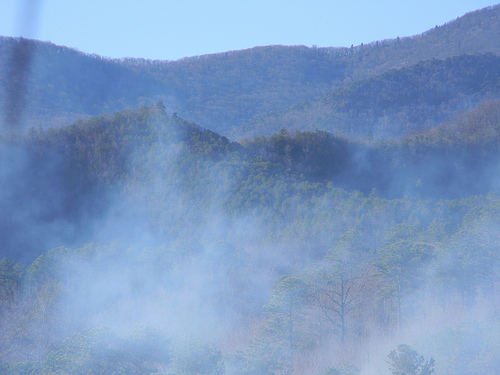
We were gifted with one of those noisy, gasoline powered leaf blowers a few months ago when a friend moved from the countryside back into town and had no further use for it. Made me chuckle considering the fact that we live in the middle of the southern Appalachian forest – “thick” by anyone’s standards – and have enough fallen leaves to drive most towns crazy. Worse, living where we do we also get fairly regular fires that love nothing better than a good thickness of dead leaves to burn. I’ve learned through the years that the low-level “brush fires” that don’t burn much other than the leaf fall and a few scraggly saplings are actually good for the forest. So long as they don’t manage to get hot enough to engulf trees. Heck, most of the mature trees can (and have) survive the ground fires just fine, a bit blacker around the trunks than they used to be. And kudzu, of course, loves fire. Always comes roaring back twice as thick as before, and does way more than its share of eating forest trees, engulfing dead cars and stray cattle herds overnight.
Filed under Environment, Food Production, Future Planning, Garden, Homestead, Maintenance, Recycling, Sustainable Living, Yard | Comment (0)Inventing a Geothermal System
June 27th, 2011
As plans for the new water system move forward, we find ourselves in sudden possession of quite a lot of high-end good-sized PVC piping of various lengths, assorted odd couplings, some strips and scraps of new carpeting (good for insulation of trenches), and a surprising amount of aluminum ductwork. Salvaged from various places. Not being content to leave what look to be perfectly good but not immediately needed lengths of such pipe and ducting behind, we’ve been rescuing as much as we can get from the dumpster-side repository at the contracting facility next door to hubby’s day job.
Some of these lengths of thick-walled new pipe are 3 or 4 inches in diameter, so I’ve been considering how we could use them as we head into this major project, other than as the ‘head’ flow from the new spring to the ram jet in the pumphouse. Given as it’s nearly July, I have also been scouting around for some form of air conditioning that doesn’t require an air-tight home and way more not-cheap electricity than we care to use. We only need it occasionally during the hottest hot-spells of summer and only at times when it’s inconvenient to spend the afternoon in the basement, out under the shade trees, or down at the swimming hole. As part of that research, I’ve been looking at geothermal engineering concepts and technology as well as at modern iterations of good old evaporative cooler (a.k.a. “Swamp Cooler”). Which looks great and works well in places like Arizona, but is not so great here in the southern Appalachians where it’s around 85-90% humidity all the time. Geothermal still looks good, so…
A Do-It-Yourself heat pump! But without the compressor/heat element assist. This could work.
Filed under Alternatives, Building, Conservation, Cooling, Energy, Environment, Future Planning, Heating, Homestead, Renovating, Yard | Comment (1)A Busy Midsummer Day
June 21st, 2011
Michelle Pfeiffer and Kevin Kline in “A Midsummer Night’s Dream.”
The sun will rise over the Heel Stone at Stonehenge on June 21st to mark the Day The Sun Stands Still. Here at my homestead, looking directly east from the back porch (the cabin is cardinally oriented), it will rise above the peak of the springhouse roof before beginning its six-month journey toward the railroad’s gigantic wall, the precise middle of which marks the Winter Solstice’s sunrise.
In the Pagan world Midsummer is sometimes called Litha by moderns, taken from Bede’s De temporum ration, or The Reckoning of Time. Because the Solstice may come any time between the 20th and the 24th of June, it also coincides with the Christian’s feast day for the nativity of John the Baptist, also called the Feast of Saint John.
Despite Shakespeare’s most memorable fantasy play about fairy queens and woodland glamours, Midsummer is somewhat of a misnomer in that the Solstice actually marks the end of spring and the beginning of summer, not the middle. But there are certain things my household will be busy doing that will continue well into the rising of fireflies from the bottomland through the ferns after dark to mark this day the sun stands still, the longest day of the year.
Filed under Cultivated Herbs, Environment, Family, Harvest, Herbal Medicine, Homestead, Wild Herbs, Yard | Comment (0)Milk Thistle Harvest – A Powerful Herb
June 16th, 2011
Today I managed to get out into the garden before noon for a little clean-up and prep. Took out the last of the early peas and radish pods from their nifty PVC tent with twine, the peas being well past done and the pods perfect for harvest. I’ll need to clean out the bed thoroughly to replant with pole beans, and I will replant radishes down below in a bare well-composted spot next to the potatoes (which are blooming great guns!).
I also donned leather gloves and de-headed the milk thistle [Silybum marianum]. They were as tall as me by this time, falling over from heavy heads to make it difficult to get past them to the rest of the garden. Those dry pods are spiny like you wouldn’t believe, as if the leaves weren’t bad enough, but all spring the leaves make great additions to salads and pot greens, very pretty variegated thick foliage you have to trim the spines off of before adding to anything. The flower heads – the usual pretty purple thistle flowers about the size of a golf ball – produce seeds that are readily marketable to herb dealers in our region, but we end up using most of them ourselves for skin treatments, general systemwide cleansing, etc.
This stately and strikingly pretty plant has been in use for more than 2,000 years as a remedy for all sorts of ailments, most notably liver and gall bladder problems. There have even been medical studies of milk thistle as a remedy for liver damage caused by pain medications such as acetaminophen. Its flavonoid Silymarin is antioxidant and anti-inflammatory, and its action on the liver appears to be stimulation of new cell growth in that organ.
Filed under Alternatives, Cash Crops, Cultivated Herbs, Garden, Health, Herbal Medicine, Homestead, Medicine, Recipes, Yard | Comment (1)Concocting a Winter Vita-Tonic
September 23rd, 2009

Today it is officially Autumn, my personal favorite season (for the colors and smells and crisp, clear air). Unfortunately, this year it’s been so cool and wet that we basically had no summer. The tomatoes turned black and died, pumpkins are rotting in the field, weeds have taken over and it’s been weeks since we’ve seen the sun.
But now is the time to prepare for winter, beyond just putting up the harvest. We managed to get the H1N1 flu right after school started, but the immune-strengthening tea I’d previously gathered and dried worked quite well to keep it relatively mild. Was only abed for a day, which is less than with any other flu I’ve ever had. It does seem to go straight to bronchi and lungs, though, so I’m glad I was prepared. I’d encourage everyone to either gather and dry the recipe’s herbs now, or get some from a local (and organic) supplier and have it ready to brew. It tastes good enough to drink hot or cold just for fun, and certainly won’t hurt you if you do!
The winter comes with its own issues for keeping yourself healthy. There’s a dramatic lack of sunshine – thus a shortage of vitamin D – and cold weather’s general ill effects on a healthy immune system. There’s also a notable lack of fresh foods (at least, those not from some South American country you’d rather avoid), and a steady diet of grains and processed or preserved foods will often come up short on nutrients that would help keep your family going. Thus as soon as it stops raining cats and dogs here on the ‘stead, I’m planning to gather and process the ingredients for a winter tonic packed with goodies. Only four ingredients (you can always add more, of course), and some local organic apple cider vinegar.
Filed under Harvest, Health, Herbal Medicine, Nutritition, Recipes, Wild Herbs, Yard | Comments (5)Late Fall Fruit: Persimmons!
October 15th, 2008

The fruit crops were abundant this year due to lack of a hard late freeze as well as due to a killing late freeze last year that killed off the apple, pear and cherry crops altogether and reduced the grape harvest by at least half. The trees and vines think they’re dying after such a bad year, so will produce like crazy the next year. Yet oddly enough, there are no acorns or hickory nuts or wild walnuts on the homestead this year. Either they’re all getting eaten as fast as they fall by deer, or there just aren’t any. So again this year I’ll have to gather my acorns a bit south at my sister’s place on the lake.
Cherries are the first to ripen in early June. My family eagerly looks forward to them and I’ve never had to try and preserve – they get eaten just as fast as I can gather. Then comes the apples in August. This year the golden delicious were fat and happy, enough to turn into pie and apple butter in addition to being eaten regularly fresh off the tree. The pears fall in September and there were plenty this year to process. These are hard cinnamon pears, not great to eat straight because they’re so tough even after sitting for a few days, so I make pear butter that needs very little sugar and is great on toast or mixed into hot oatmeal or cream of wheat.
The grape harvest starts with concords in early September and then muscodines later in the month. With those, I thought the fruit harvest was done for the year when I happened to discover now in mid-October a lone American persimmon tree [Diospyros virginiana] in the back corner of the yard behind the shed that is absolutely loaded. We’ve lived here 16 years and I never saw fruit on this 40-foot tall tree, so I guess it must have reacted to last year’s late freeze just like the other fruit trees did. Hmmm… what to do with persimmons?
Filed under Food Storage, Harvest, Homestead, Nutritition, Wild Foods, Yard | Comment (0)Herbal Recipes for Tea and Medicine
June 5th, 2008
Part 2: More Herbs and Their Uses

Part of homesteading in the country or in the city is to become familiar with the land and make it work for you. We grow as much of our own food as we can, and many of us will also (attempt to) grow as many useful plants as possible for various medical and/or income purposes. In the two terraces beneath the grape vines at the top of my garden we grow culinary herbs. The perennials have their beds and spots, the annuals are usually scattered in amongst the vegetables farther down the hill.
But there are other useful plants growing elsewhere on the property. There is blue flag growing at the edge of the driveway and bordering the disc golf fairway (orris root). There are large thickets of wild roses above the cabin and trained to a welded rebar ‘tree’ in the back yard (rose hips). There are small flower beds sporting yucca and yarrow, joe pye and wild sunflower. Our forest is thick with dogwood, tulip poplar and maple, growing in the shade in rich forest loam are ginseng and goldenseal and black cohosh and Mayapple. I can gather purslane and chickweed and cleavers galore, all are great in a muslin bath bag for a hot soak, soothes and moisturizes skin.
Becoming familiar with the useful plants that grow on your property – whether they grow wild or are managed, or you plant and tend them in beds, is a long-term project. You should know how to identify them in all stages of their growth through the year, as well as what parts are most useful when, and for what. For instance, the poplar buds in spring are known as “balm of Gilead” and make a fine ingredient in skin salves for cuts, scrapes or just dry, itchy skin. The winds of March blow them down by the basketful from the tops of 100-foot trees, I gather them as soon as the wind stops blowing. In fall the dogwoods sport bright red berries that are excellent tonic ingredients, rich in vitamins and flavinoids but only available in the fall. The wild rose hips have to freeze before they finally turn red and are ready to harvest, usually in November. Mayapple roots are best gathered in May, they’re pretty much invisible and impossible to find after that, once the above-ground plant has died back to nothing.
Continue reading »
Water As Precious Resource
April 30th, 2008

People used to think about water as an infinite resource. They could use it, abuse it, pollute it and sink their garbage into it with impunity, it would never run dry and would somehow clean itself of sewage and chemicals and industrial waste. This short-sighted view of life’s most precious and necessary resource justified the great post-war “turf boom” expansion of the population into designed suburbs of cookie-cutter houses with neat green lawns and homeowners’ associations that decided they could dictate what residents were allowed to plant, whether there could be a few weeds in the mix, and how often those green expanses of useless grass had to be watered and dosed with chemicals in order to maintain the cookie-cutter expanses of identical expanses of useless grass.

Now that we know water is a lot more precious than we thought, that climate change is imposing long-term droughts on entire swaths of the earth, that unwise allocations have drained ancient aquifers, and that a lot of the water people have to drink is polluted by things nobody really wants to know about, it’s a good time to re-think our entire approach to water. This is yet another necessary change in humanity’s relationship with the natural world that must start in the countryside and outer ‘burbs with motivated individuals who will commit to doing things differently, and educate their neighbors about how it’s done and how great it can be made to look.
Most of the surface and groundwater on the planet is salty. Shortages of fresh water have led to conflicts and open warfare through history. In Bolivia the American corporation Bechtel has attempted to corner the water market in order to privatize it, even making it illegal for individuals to harvest rainwater from their own property. Their model for this ridiculous legislation comes from Colorado, where it’s also illegal to harvest rainwater (because it diminishes downstream supply).
Continue reading »
Home Grown Revolution
April 10th, 2008
Here is a wonderfully entertaining and inspirational video about “urban homesteading” and modern Victory Gardens, brought to us by Peter Seller’s cultural arts class at UCLA using clips from Treehugger TV’s Path to Freedom. Sit back, relax, and enjoy!
Filed under Community, Garden, Homestead, Independence, Yard | Comment (1)